Anomaly detection in quasi-periodic energy consumption data series: a comparison of algorithms

Dec 1, 2022·
Niccolò Zangrando
,
Piero Fraternali
,
Marco Petri
Nicolò Pinciroli
Nicolò Pinciroli
,
Sergio Luis Herrera González
· 0 min read
PDF
Abstract
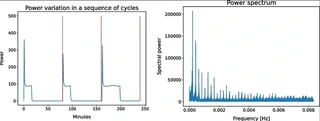
The diffusion of domotics solutions and of smart appliances and meters enables the monitoring of energy consumption at a very fine level and the development of forecasting and diagnostic applications. Anomaly detection (AD) in energy consumption data streams helps identify data points or intervals in which the behavior of an appliance deviates from normality and may prevent energy losses and break downs. Many statistical and learning approaches have been applied to the task, but the need remains of comparing their performances with data sets of different characteristics. This paper focuses on anomaly detection on quasi-periodic energy consumption data series and contrasts 12 statistical and machine learning algorithms tested in 144 different configurations on 3 data sets containing the power consumption signals of fridges. The assessment also evaluates the impact of the length of the series used for training and of the size of the sliding window employed to detect the anomalies. The generalization ability of the top five methods is also evaluated by applying them to an appliance different from that used for training. The results show that classical machine learning methods (Isolation Forest, One-Class SVM and Local Outlier Factor) outperform the best neural methods (GRU/LSTM autoencoder and multistep methods) and generalize better when applied to detect the anomalies of an appliance different from the one used for training.
Type
Publication
Energy Informatics
publications
Nicolò Pinciroli
Authors
Postdoctoral Research Fellow

I am a postdoctoral research fellow at Politecnico di Milano, working at the intersection of artificial intelligence and astrophysics. I develop methods that combine spectra, images, time series, and scientific literature to study rare astronomical sources and transient phenomena. My research spans multimodal representation learning, explainable AI, gravitationally lensed transients, and the search for candidate pulsating ultraluminous X-ray sources.

I collaborate with INAF’s Osservatorio Astronomico di Roma and AstroAI at the Center for Astrophysics | Harvard & Smithsonian. I also work on time-series anomaly detection, predictive maintenance, and language-model applications for energy efficiency, and lead Work Package 3 of the Horizon Europe ENERGENIUS project.

I completed my PhD in Information Technology at Politecnico di Milano in June 2026, with the thesis “Making discoveries with multimodal astrophysics.”