
The hunt for new pulsating ultraluminous X-ray sources: A clustering approach
Presentation on a clustering approach for discovering new pulsating ultraluminous X-ray sources.

Presentation on a clustering approach for discovering new pulsating ultraluminous X-ray sources.
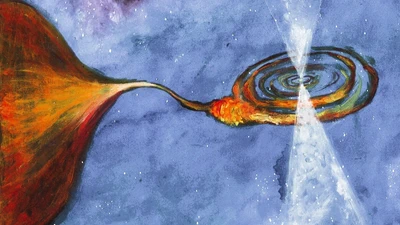
Presentation on genetic and evolutionary algorithms for finding pulsations in astrophysical data.
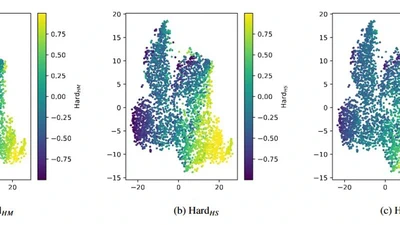
The study of X-ray spectra is crucial to understanding the physical nature of astrophysical sources. Machine learning methods can extract compact and informative representations of …
Invited talk on the use of multimodal data in X-ray astrophysics.
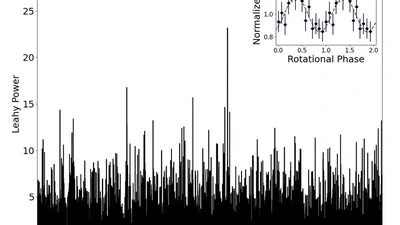
X-ray burst oscillations are quasi-coherent periodic signals at frequencies close to the neutron star spin frequency. They are observed during thermonuclear Type I X-ray bursts …
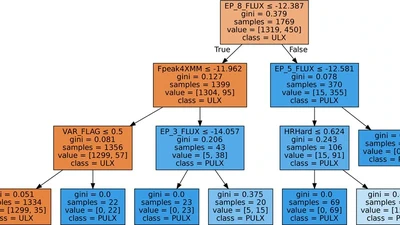
Context. The discovery of fast and variable coherent signals in a handful of ultraluminous X-ray sources (ULXs) points to the presence of super-Eddington accreting neutron stars, …
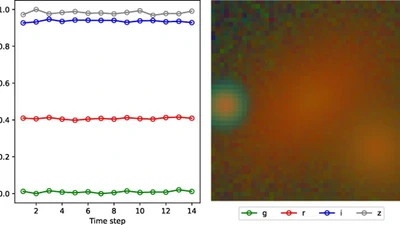
Gravitational lenses are caused by massive astronomical objects that distort space-time, bending light. They can distort transient astrophysical events, such as supernovae (SN), …
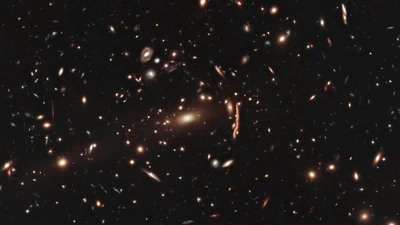
Talk on AI algorithms for gravitational lenses analysis.
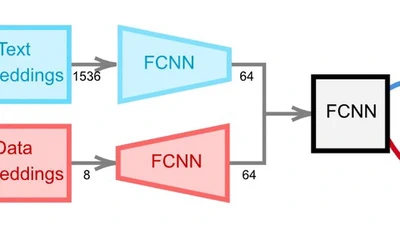
Astronomers have produced large multimodal datasets that include images, spectra, and time series, and that encode physical information about the observed objects. In addition, a …
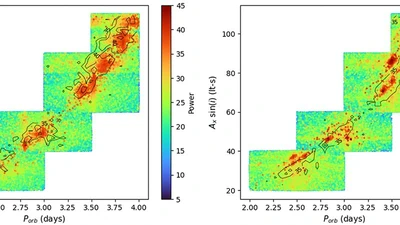
Ultraluminous X-ray sources (ULX) are extragalactic objects with observed X-ray luminosities largely above the Eddington limit for a 10 M⊙ black hole. Currently, it is believed …